Signature Projects
Our Signature Projects
For more than 60 years, Florence Cement Company has been trusted to deliver some of Michigan’s most impactful large-scale developments and essential public works projects that communities rely on every day.
Explore our recent project highlights below.
MCA Awards | Category: Special Innovative Paving
Client: Bridging North America / Windsor Detroit Bridging Authority
Project: Gordie Howe International Bridge – U.S. Port of Entry
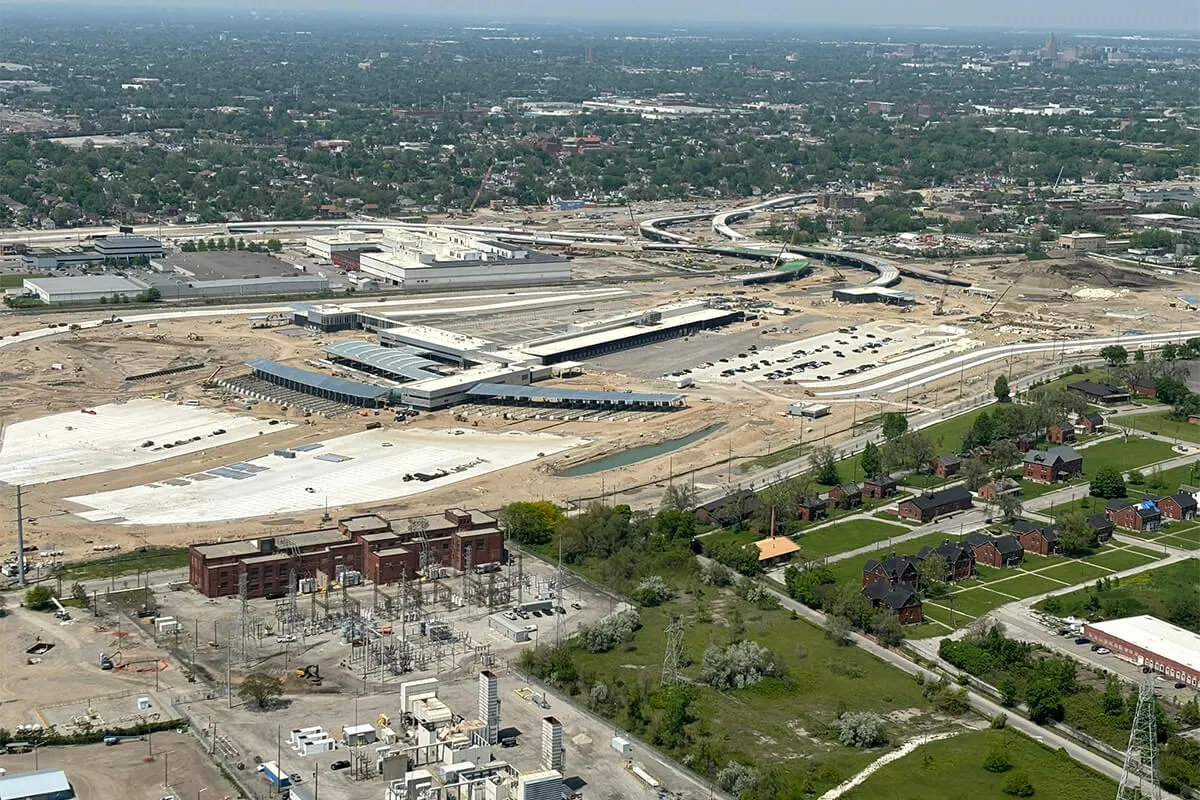
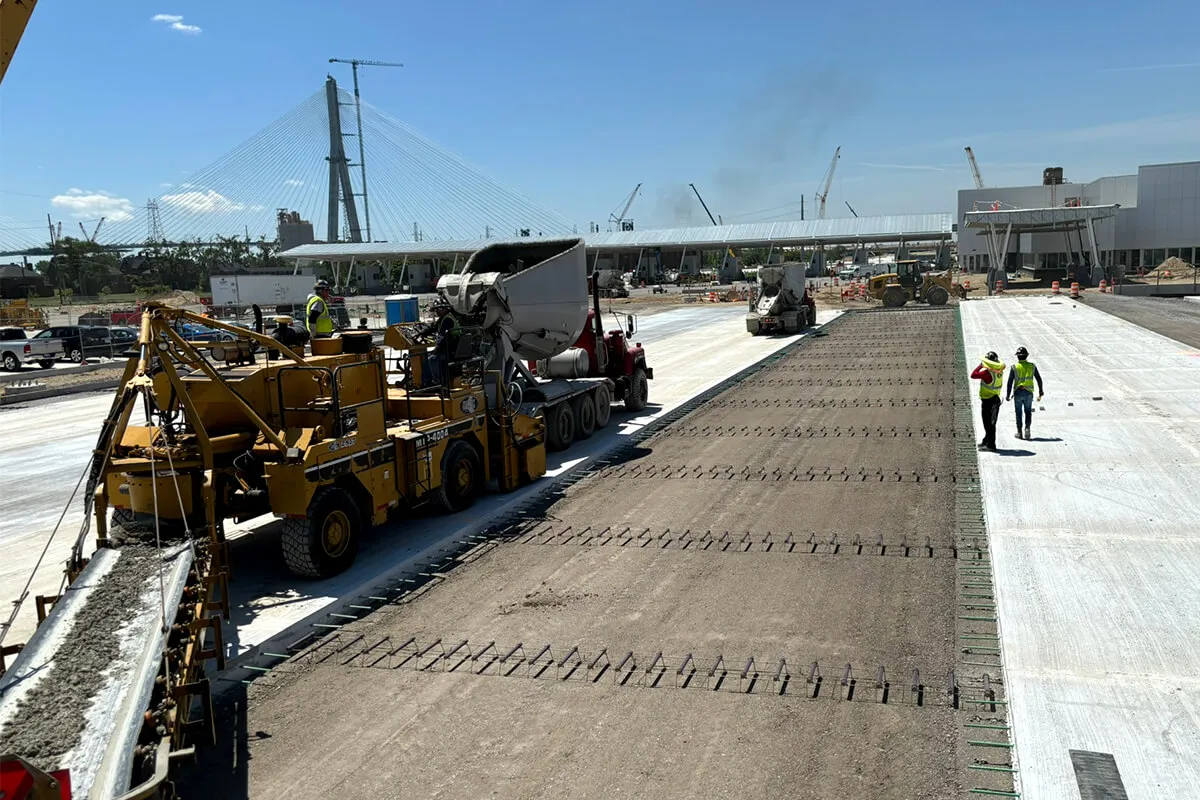
Challenge: Due to the complex layout of the U.S. Port of Entry, the project required both variable-width paving and significant hand-placed concrete work. Florence Cement Company successfully managed pavement widths that varied to accommodate inspection lanes, security features, heavy truck traffic, and tight geometric constraints throughout the site. In areas with limited access, embedded infrastructure, and specialized detailing, Florence Cement Company crews performed hand-placed concrete work to meet strict design tolerances and finish requirements.
Solution: The Gordie Howe International Bridge project is one of the largest and most significant infrastructure investments in North America, designed to enhance cross-border trade, transportation efficiency, and economic development between the United States and Canada. As part of this landmark effort, Florence Cement Company performed extensive concrete paving work at the U.S. Port of Entry to support inspection plazas, roadways, and operational areas critical to the function of the facility.
Concrete placement for this project was executed over two consecutive years by Florence Cement Company. In 2023, a total of 90,786.95 square yards of concrete pavement was placed. Construction continued in 2024 with an additional 166,969.98 square yards, bringing the total area paved to 257,756.93 square yards. All pavement was constructed at a uniform depth of 11.25 inches, resulting in a total concrete volume of approximately 80,550 cubic yards.
Careful coordination and sequencing were essential to maintain progress on a highly secure, fast-paced jobsite. Florence Cement Company worked closely with project stakeholders and other trade contractors, maintaining continuous quality control and adherence to rigorous program requirements and inspection standards. Concrete placement operations were planned and executed to ensure durability, long-term performance, and the ability to withstand heavy commercial vehicle loads and constant operational use.
Through precise execution, detailed planning, and adaptability to changing site conditions, Florence Cement Company successfully completed the U.S. Port of Entry concrete paving scope for the Gordie Howe International Bridge. The scale of work, combined with the technical challenges of variable widths and hand placement, highlights the craftsmanship, coordination, and professionalism required to deliver concrete infrastructure on a project of national and international importance.
MCA Awards | Category: Paving - Residential Construction
Client: City of Warren, Michigan Department of Public Works
Project: Northampton Water Main and Pavement Replacement
Challenge: The project began with the replacement of a water main. Originally, the plan was to install the new water main next to the old one, located in the greenbelt outside the right-of-way. However, due to the age of the existing water main, this approach was deemed too risky. As a result, the new water main was to be placed beneath the existing roadway, necessitating the reconstruction of the existing pavement.
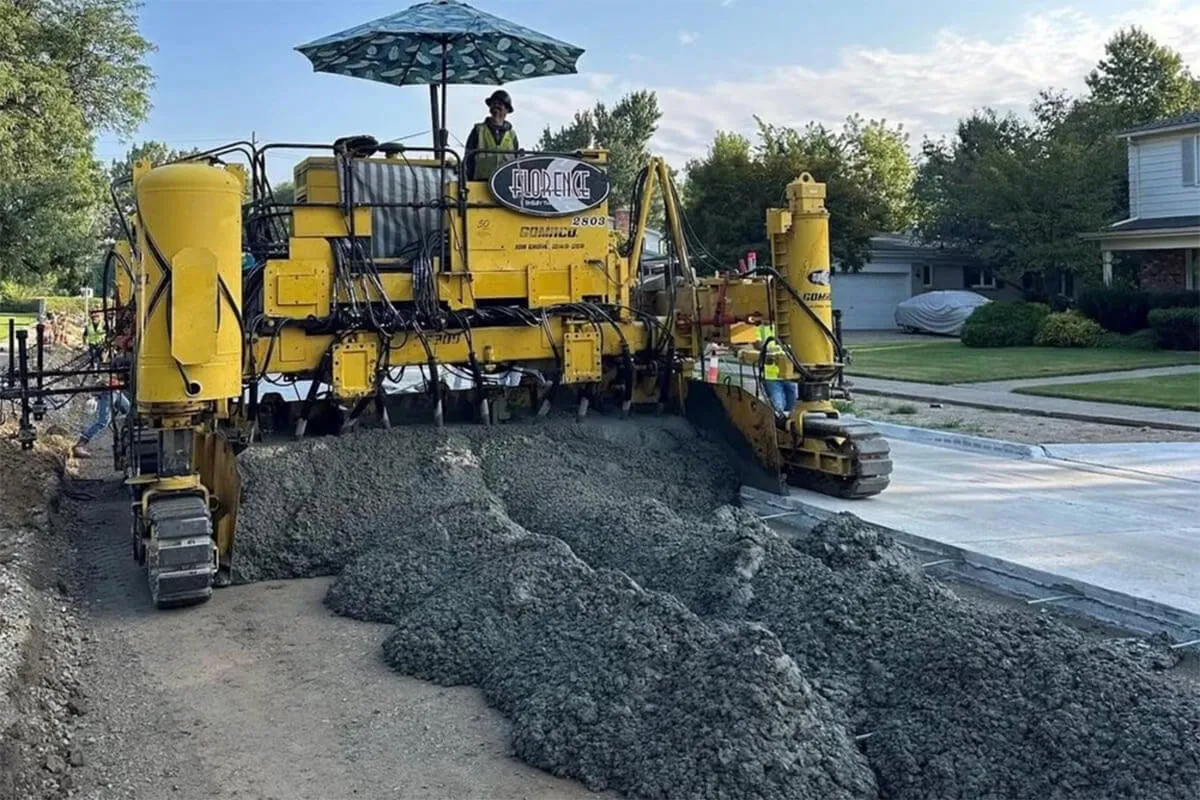
Solution: The 7-inch thick, 28-foot-wide concrete roadway was placed in partial widths to maintain access to residential homes during construction. Two gaps were left in the road layout at the intersections of Northampton with Lee Street and with Sheffield Street.
Most of the street was paved to a width of 14 feet with a 6-inch integral curb using a Gomaco four-track slipform paver. At the north end of the project, where Northampton dead-ended, the crew from Florence formed and placed a portion of the concrete by hand due to the presence of a Macomb County Drain Commission stormwater pump station.
Florence Cement Company, in partnership with Hercules Concrete, successfully completed this award-winning project through careful planning and precise concrete placement, maintaining access to homes while overcoming numerous challenges.
MCA Awards | Category: Paving - Airports - Small
Client: Alpena County, Michigan
Project: Alpena County Regional Airport
Challenge: One of the key challenges was the utilization of cement-treated base (CTB), marking Florence Cement Company's first experience producing this material. The CTB presented difficulties in handling, requiring daily cleaning from batch plant to machine. Overcoming this complexity highlighted the company's adaptability and expertise in handling novel construction materials.
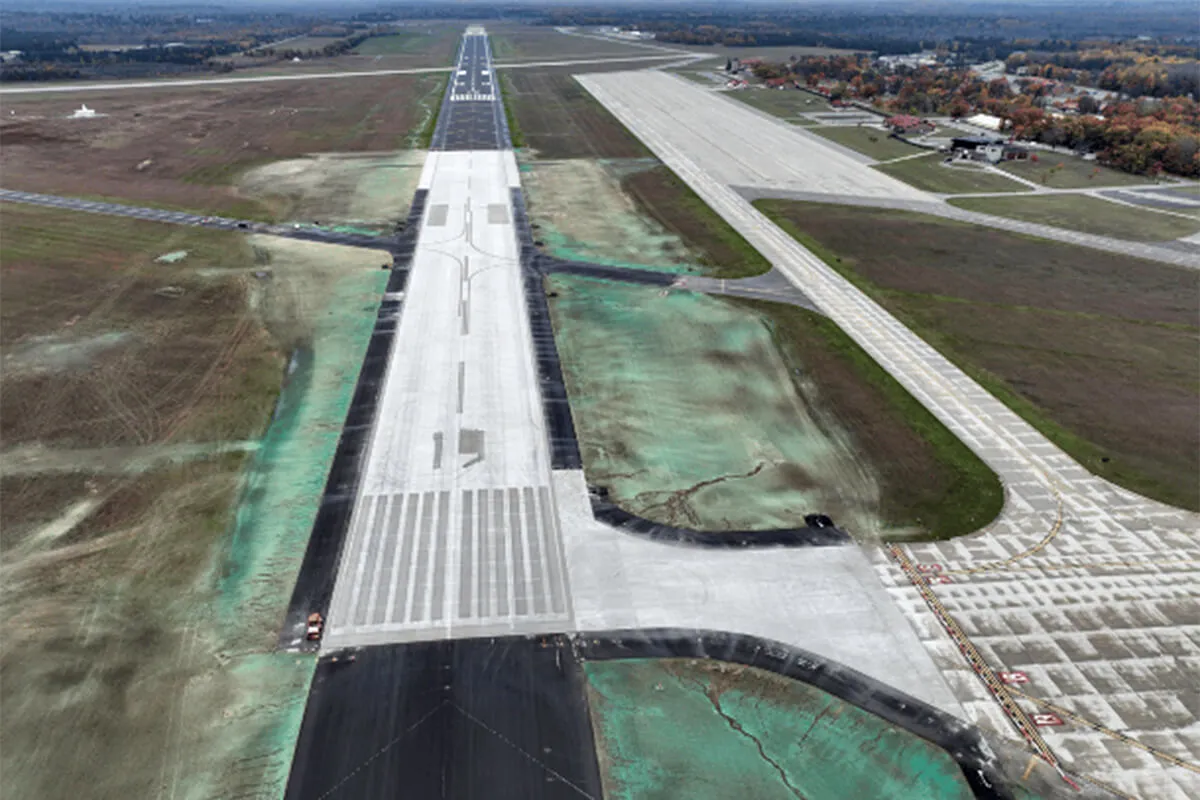
Solution: Florence Cement Company recently concluded a groundbreaking project to rehabilitate the Alpena Airport Runway 1-19 TDZ Pavement using non-reinforced concrete. This ambitious initiative involved the removal and replacement of 60,800 square yards of concrete and asphalt pavement.
This pavement was constructed on a meticulously prepared underlying surface, adhering to specified lines, grades, thickness, and typical cross-sections outlined in the project plans.
The project utilized 32,700 square yards of concrete pavement with a thickness of sixteen inches, amounting to 14,550 cubic yards. Additionally, a 6-inch cement-treated permeable base spanning 33,300 square yards was incorporated into the project under the concrete runway.
A notable aspect of the construction process was the careful planning and execution of the paving lanes. Pilot lanes were poured initially, allowing for a continuous pour, and minimizing wait times for curing. This strategic approach contributed to the efficiency of the project, ensuring a seamless construction process.
Incorporating environmentally friendly practices, the existing runway lanes were removed, and the concrete was crushed and repurposed as a base material for the mainline pavement. This recycling effort not only reduced waste but also contributed to the overall sustainability of the project.
Florence Cement Company's successful completion of this rehabilitation project is a testament to its commitment to innovation and sustainability in the construction industry. The entire team at Florence Cement Company has set a new standard for runway rehabilitation, combining efficiency, adaptability, and environmental responsibility.
MCA Awards | Category: Arterials
Client: Road Commission of Oakland County
Project: Baldwin Road Widening and Reconstruction
Challenge: Florence Cement was tasked with paving over 40,000 square yards of 10-inch, high-performance concrete pavement for the roadway. Multiple paving widths and roundabout jointing required Florence to utilize a paver over forms for narrow widths and inside forms for wider placements, all while exceeding the MDOT Ride Quality specification.
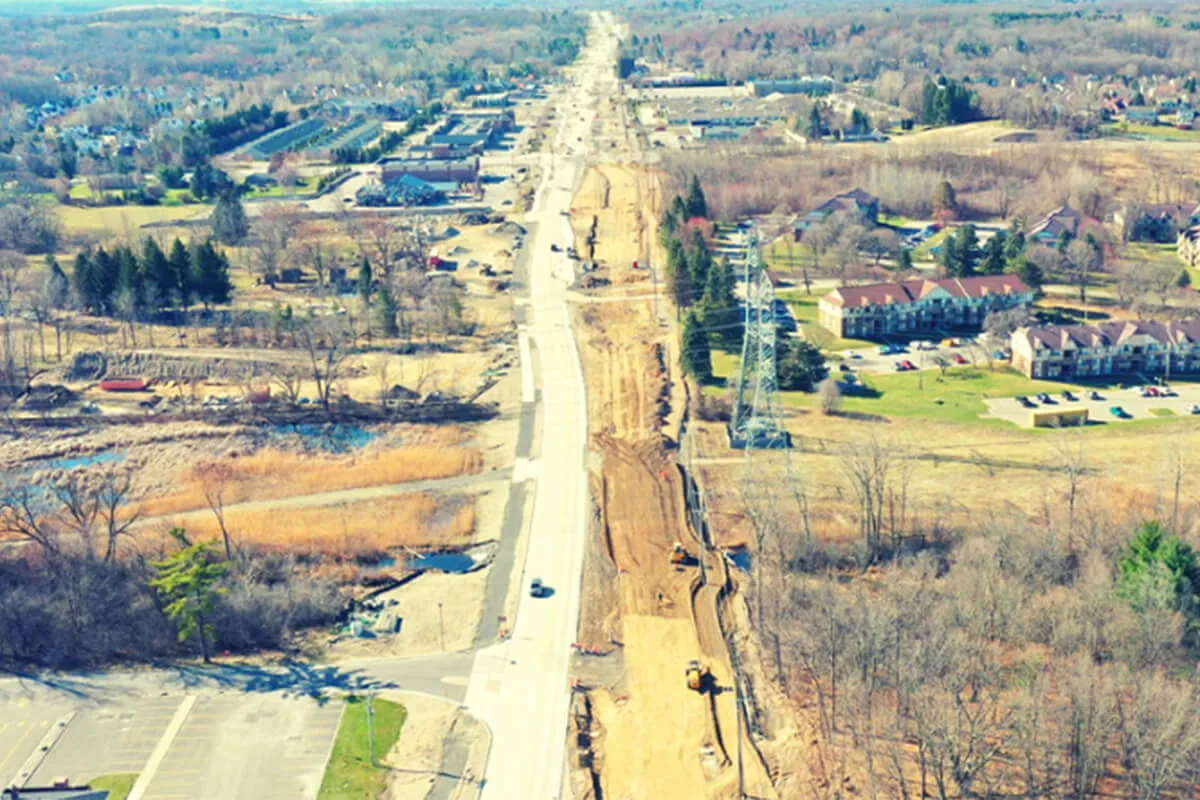
Solution: The multi-year widening and reconstruction of Baldwin Road in Orion Township has resulted in a wide, new concrete boulevard section from Gregory Road to Waldon Road. Three roundabouts also were added at the major intersections along the route, at Gregory, Maybee, and Waldon Roads.
Florence Concrete performed daily aggregate testing to ensure optimal aggregate gradations via Florence’s Helco SBS Portable Batch Plant, which produced all 12,000 cubic yards of MDOT P1 Modified concrete.
MCA Awards | Category: Collectors
Client: City of Hamtramck, Michigan Department of Public Services
Project: Holbrook Avenue Reconstruction
Challenge: This project had its fair share of obstacles. Along with the water main replacement, an old pedestrian tunnel underneath the street, as well as old encased train tracks, required removal. There was little historical data on the tunnel in terms of size, installation, and when it was constructed, so great caution had to be taken. Florence crews also had to maintain access to both the Kowalski Sausage Company and Hamtramck Senior Plaza, both located immediately adjacent to the roadway reconstruction.
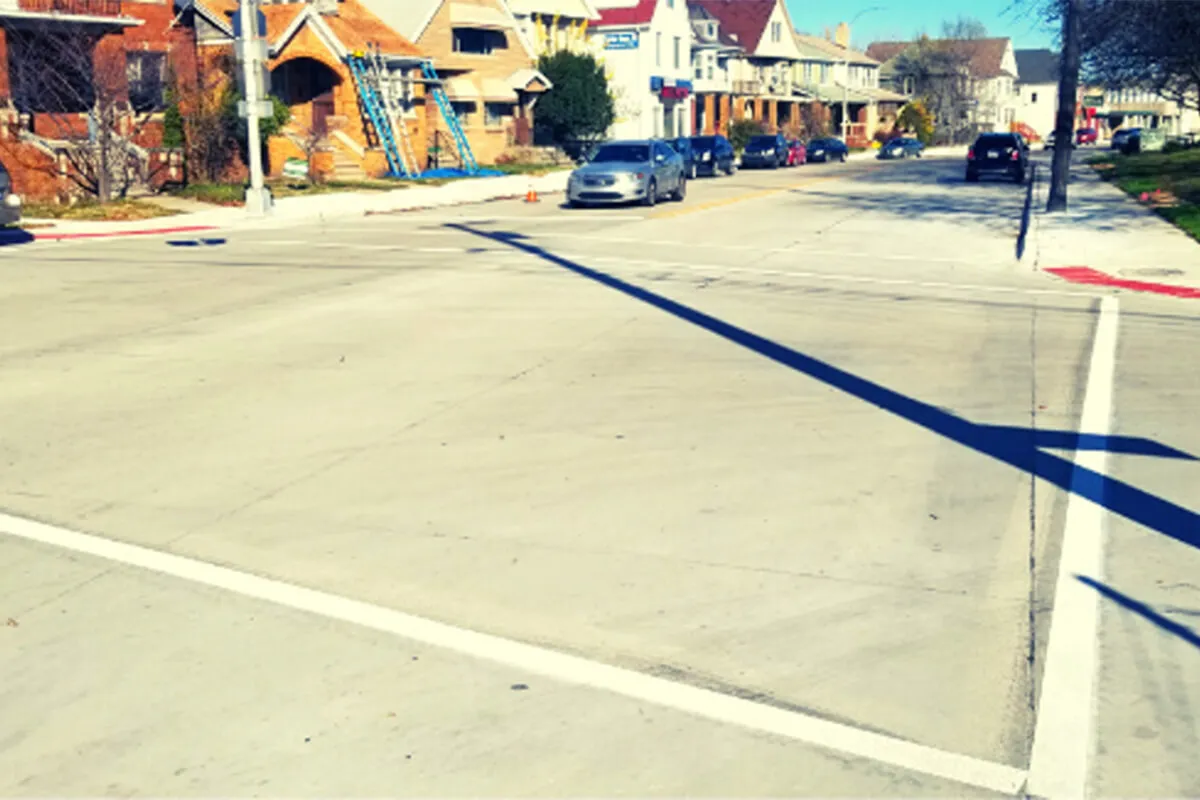
Solution: Holbrook Avenue’s reconstruction in Hamtramck was a true test of skill and precision in concrete roadway reconstruction. This project consisted of nearly 11,000 square yards of 9-inch-thick concrete pavement, along with the installation of new ductile-iron water main and copper service lines to residents’ homes.
Despite its complexities, this five-stage construction project was consolidated and completed in three stages. The new roadway, water main and non-lead water services will provide this community with the civil infrastructure needed to continue its economic recovery and welcome new citizens to Hamtramck.
MCA Awards | Category: Residential Streets
Client: City of Farmington Hills, Michigan
Project: Heritage Hills Phase 2
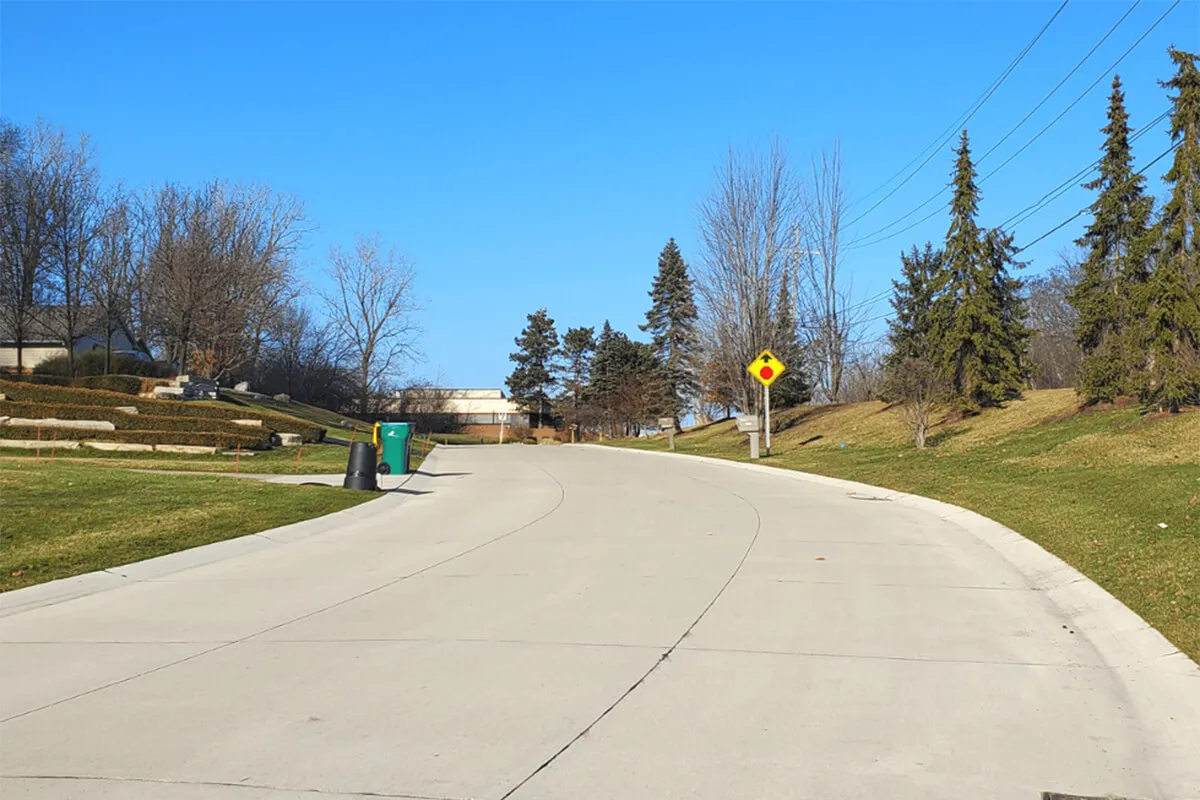
Challenge: What made this project challenging was maintaining access for the residents. There was constant communication between the construction team, the City of Farmington Hills, and the residents to notify them of the upcoming work taking place on their street. This also required coordination with emergency services, garbage pick-up, and mail delivery services. The project was broken into 700-foot sections to minimize the number of residents affected by the construction. The old pavement and aggregate base had to be completely removed and the new aggregate base was replaced each day to maintain access for residents.
Solution: What made this project special was the total size of the 28,000 square yards (SYD) of residential streets being reconstructed. The project worked on eight (8) separate residential streets (Hunter Whip, Glouster Circle, Glouster Court, Ravenscroft, Old Timer, Old Timber Court, Yorkridge, and Charleston Court).
The project was separated into six (6) phases. Each phase included the complete removal of existing pavement and aggregate base, placement of 1x3 crushed stone for stabilization, followed by MDOT 21AA aggregate base and topped with 7 inches of concrete pavement. The pavement was poured using the slip form machine with limited handwork pours to connect the intersections of the streets.